
MBBS
Key Factors for Indian Students Considering MBBS Abroad
Overview
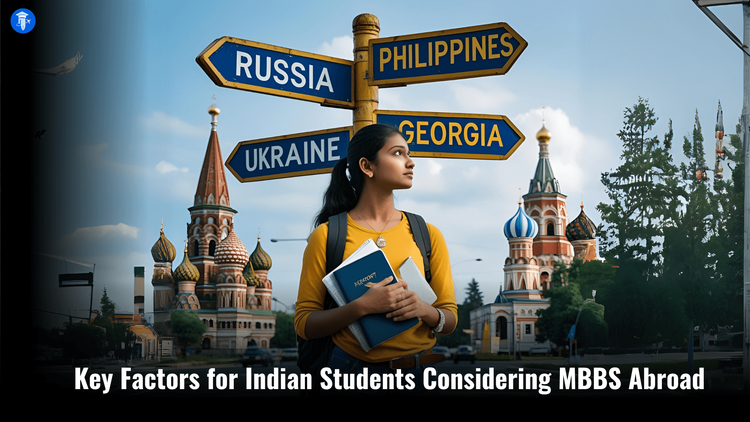
If you’re a medical student and looking for Study MBBS Abroad for Indian Students. For countless Indian students, the idea of studying for an MBBS abroad can be exhilarating, as well as confusing. The benefits of an overseas education can include globally recognised degrees, modern teaching methods, and in most cases, lower tuition fees. It is important for students to select the appropriate foreign medical university, so that they could have a fruitful medical career ahead. In this blog, we will reveal 20 important considerations for Indian students as they search for a medical university abroad, and highlight some of the unique experiences of studying abroad vs. an education in India.
Factors to Consider MBBS From Abroad for Indian Students
For those who want to apply to an overseas medical school, there are a lot of possibilities out there, but with their merits and drawbacks. More than just academic achievement should be taken into account when making a good decision.
Academic Recognition, Curriculum & Faculty
First things Recognition and Accreditation are both vital steps. The university is recognized by the World Health Organization (WHO) and India’s National Medical Commission (NMC). Recognitions from both guarantee your medical degree will be endorsed for practice in India and globally, which can save your future career chances, and if you are unqualified, your qualifications will not be recognized.
Another factor, and this is also quite important, is the Curriculum and Teaching approach. The curriculum is lined with theoretical education and clinical medical education. Institutions greatly emphasize early patient exposure and clinical thinking, which is most important through problem-based learning.
Also, keep in mind; the Language of Instruction. Indian students are most successful in universities that deliver MBBS in English. I would highly recommend this. There are no barriers with language regarding medical terms, so communicating with patients during clinical rotations, and patient visits will not be a barrier.
What matters most is the quantity and quality of the educational experience; quantity and quality is directly proportional to the quantity and quality of the faculty; Together, it is a combination of everything you can check, together, the documentation on the academic credentials, professional experience of students as well as research performance. If your fellow medical students come from skilled medical professionals and correct and qualified researchers, you will get good guidance and mentorship, with both the educational experience and quality of the educational experience being a source of enjoyment and continued learning for you as well.
Infrastructure, Clinical Exposure & Global Opportunities:
Infrastructure and Facilities are required for Medical Education. Why? Including adequately equipped laboratories, advanced simulation facilities, state-of-the-art medical training facilities, and well-stocked libraries with rich resources. The only resources that can offer an all-around learning experience and enable practical skill acquisition.
Medical training emphasizes Clinical Exposure: Look into how the universities and hospitals work together, as well as how they both play a role in hands-on rotations. The amalgamation of different clinical experiences can make one a better diagnostician, learn patient management skills, and develop self-confidence in a real-life clinical setting.
Watch the reach and movement of a degree worldwide. A degree from an internationally accredited university greatly improves your chances of entering into post-graduate studies or practicing medicine in other countries, usually after writing the national medical licensing examinations for that country.
Cost, Safety & Student Support Systems:
The Cost of Education is a primary disincentive. Different countries and institutions have different ideas regarding the cost of education and living. And, even though the costs of studying MBBS at an Indian private medical college may be less expensive than studying in other countries, you still need a budget in mind to qualify.
As you age, it is even more important to keep in mind the host country’s and city’s safety and environment. Examine the crime risks, political risk, and environmental issues to create a safe learning environment that is safe.
The international student support system is the Strong Student Support Services. The universities can aid you in settling, visa processing, academic counseling (for international students), and cultural adaptation programs to make you feel more comfortable. Medical education focuses heavily on Clinical Exposure. Investigate the shared relationships between universities and hospitals and how they both contribute to hands-on rotations. Overall exposure to a variety of clinical modes can make you a better diagnostic physician, teach you how to manage patients in various aspects, and provide you with the level of comfort and confidence to treat patients in a clinical environment.
Look at the scope and effectiveness of the degree globally. A degree from a university listed on the WHO’s Internationally accredited university list increases your chance to enter post-graduate studies or to practice medicine in other countries after writing the national medical licensing examinations of each respective country.
The Cost of Education is a critical disincentive. Countries and entities each have different narratives about the costs of education and living. Consequently, we ask even if the total cost of doing MBBS at an Indian private medical college is less than a similar study and living experience in another country, you still need some budget criteria to be eligible.
Student Support & Clinical Integration
As you develop, especially as time passes, it is important to consider your safety and the environment in the host city and country in which you will be studying. Look at the crime and political risk, and what environmental risks exist that would make a safe learning environment.It is also very important when you are thinking about whether to stay on campus, to know if the university provided boarding and whether there will be unauthorized boarding.
Study well by using the Visa Laws of each nation as the basis for your analysis and think thoroughly and supportively. University graduates have a resource in the FMGE Pass Percentage with which to measure academic ability and academic compliance with Indian medical regulations.
How Does MyCareerpathshala Help You With This?
University admissions in India and overseas, all the assistance from MyCareerpathshala. Through providing customized counseling and profile assessment, they guide students in selecting the right courses and institutions. Expertise: Through making use of AI-based software, they assist with shortlisting colleges, particularly for medical students, aligning their NEET scores with colleges.
From application forms to visa processes, they offer end-to-end admission guidance and support, and assist with exam preparation, SOPs, or LORs. They even carry out interviews for candidates who are seeking permanent residency. In addition, they provide accurate information on study abroad deadlines and optimal destinations.
Conclusion
Finally, think and plan about how you will acclimatize to the culture and climate of your own country? The surroundings will be your determining factor for your living style and style of learning. Each year, more than 5000 Indian students pursue MBBS abroad. The best way to pursue your career goals, and determine a direction in the employment/occupational sector of your choice, whatever location you are in, is within the walls of your university. Why? You need to ask yourself these questions when considering your options.