
B.P. Koirala Institute Of Health Sciences (BPKIHS): Fee, Admission & Courses
Nepal, Sunsari District, Nepal|Estd.1993
I want to get admitted into this university, I need counselling.
Get CounsellingI am still figuring out best options for my study abroad.
Find ProgramsHow to apply in B.P. Koirala Institute Of Health Sciences with my career pathshala
Need expert assistance in securing enrolment at this university?
Its FREE
About B.P. Koirala Institute Of Health Sciences
Overview:
The B.P. Koirala Institute of Health Sciences (BPKIHS) is considered one of the top medical universities in Nepal, located in Dharan, in eastern Nepal. The institute was established on 18 January, 1993 as a cooperative venture between the Governments of Nepal & India, and was granted university status in full on 28 October, 1998. The institute began its MBBS program on 10 March, 1994.
Quick Highlights:
| Parameter | Detail |
| Institute Name | B.P. Koirala Institute of Health Sciences (BPKIHS) |
| Location | Dharan, Sunsari District, Eastern Nepal |
| Established | 18 January 1993 (university status: 28 October 1998) |
| MBBS Program Started | 10 March 1994 |
| Type | Autonomous, government-affiliated health sciences university |
| Course Duration | 4.5 years academics + 1 year internship (5.5 years total) |
| Medium of Instruction | English |
| Total Annual MBBS Intake | 100 seats (Nepalese + foreign combined) |
| Recognition | Nepal Medical Council, NMC (India), WHO (WDOMS) |
| Total Tuition Fees | $ 74,555.00 (66,06,624.23 INR) |
| Hostel | Mandatory; separate hostels for men and women |
| Teaching Hospital | B.P. Koirala Central Teaching Hospital (700+ beds) |
| NEET Requirement | Mandatory for Indian students (qualifying percentile only) |
Key Highlights of BPKIHS
Tuition Fee Breakdown
Total Course Fee
$74,555
Avg. $24,852 / per year
Note: Fees are subject to change based on university policy and currency exchange rates.
Why Choose BPKIHS?
Quality Education
BPKIHS uses a partially problem-based, community-oriented curriculum rather than a purely textbook model, introducing clinical context from the first two years through its own teaching hospital and district hospital network.
Global Recognition
The degree is recognised by the Nepal Medical Council, India's NMC, and the WHO, with BPKIHS listed in the World Directory of Medical Schools (WDOMS) — a baseline requirement for Indian licensing eligibility.
Hands-on Training
Practical training occurs for each student at B. P. Koirala Central Teaching Hospital, one of the largest hospitals in eastern Nepal with an extensive catchment area that offers clinics, wards, emergency services, and diagnostic services.
Highly Qualified Instructors
Over 300 faculty, most with either MD/MS degrees or similar post-doctoral level degrees, provide instruction across standard basic sciences and clinical areas of study while continuing to see patients.
Faculty Available from India and South Asia
BPKIHS being a Nepal-India collaboration, has traditionally had Indian and South Asian faculties besides the Nepali faculty. Verify the present situation with the admissions office, as it may vary from year to year.
Safe & Student-Friendly Environment
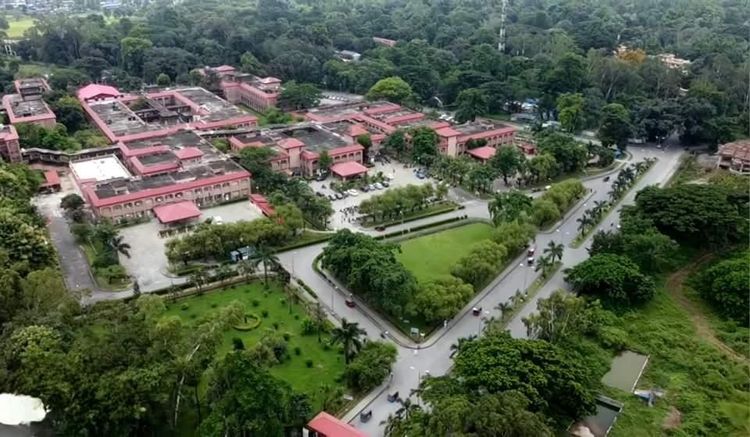
Dharan is a settled town with a largely self-contained campus — hostels, library, cafeteria, sports facilities, and the hospital are co-located. Hostel stay is mandatory, with separate facilities for men and women and round-the-clock security.
Advantages of Studying MBBS at BPKIHS
English Language Medium Instruction
Listed in WHO And WDOMS
700+ Bedded Teaching Hospital
Excellent Clinical Exposure
Rural and Community Internship
Close Proximity to India With Easy Travel
NMC Compliant 5.5-Year MBBS Program
No Requirement For IELTS Or TOEFL
Affordable When Compared To Private Indian Colleges
Indian Friendly Environment.
Common questions asked
Question: Is BPKIHS recognised by India's NMC?
Question: Is NEET compulsory for Indian students?
Question: How do I know what my NEET score should be?
Question: How long is the MBBS course?
Question: What's the total cost for an Indian student?
Question: How many seats are available for foreign students?
Question: Is a visa required for Indian students?